The vocabulary you'll meet on product pages and lab reports, explained in plain English.
By Certified Gemologist
A working glossary of the terms you'll encounter on TopGems product pages and on gemological lab reports. Where a term has a dedicated guide, we link to it.
A
AGL — American Gemological Laboratories. New York-based lab specializing in colored stones. See Certification Explained.
AIGS — Asian Institute of Gemological Sciences. Bangkok-based lab, strongest on Southeast Asian rubies and sapphires.
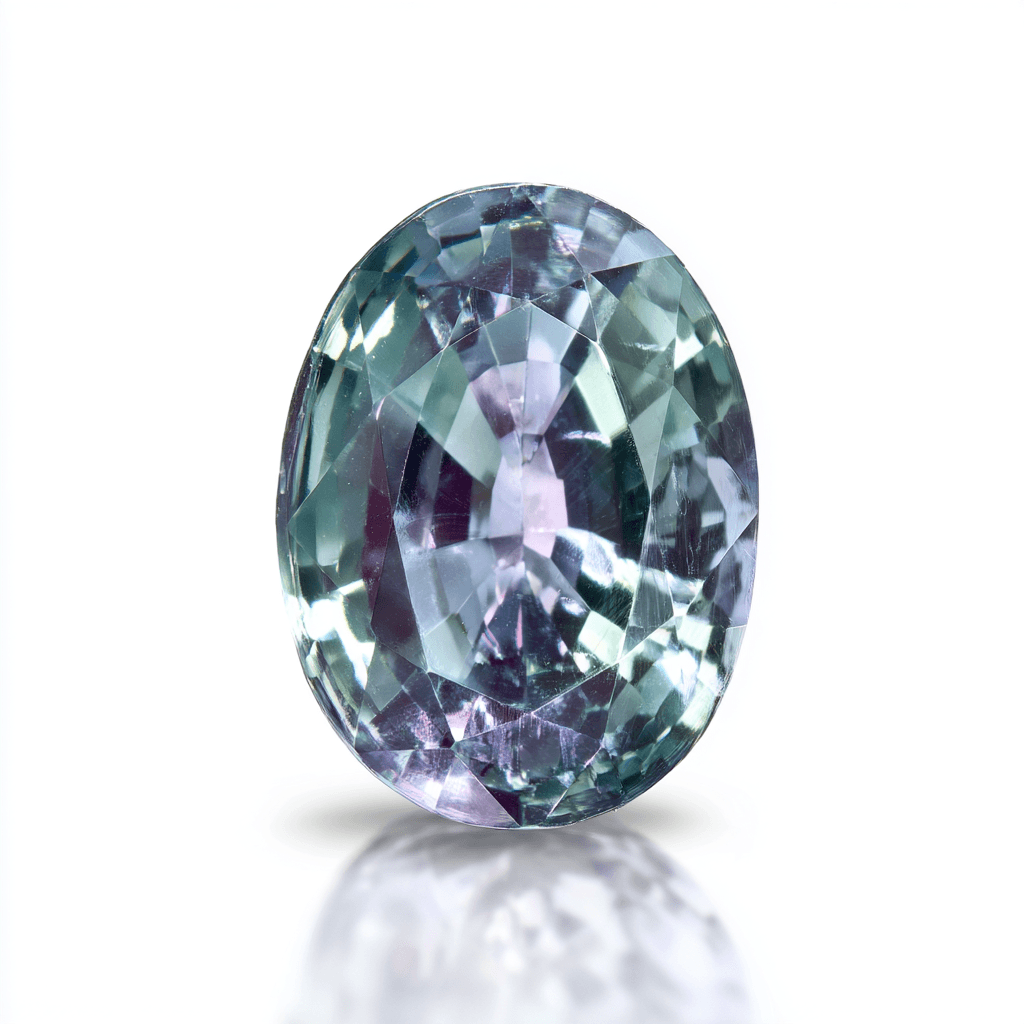
Alexandrite — chrysoberyl variety that shifts hue from green in daylight to purplish-red under incandescent light. The more dramatic the change, the higher the value.
Asterism — the "star" effect on star rubies and star sapphires — six (or very rarely twelve) rays of light forming a star across a cabochon surface, caused by oriented needle-like inclusions.
B
Birefringence — a stone's ability to split light into two rays. Used by gemologists to identify species. Not visible to the buyer.
Brilliance — the total amount of white light returned from a stone to the viewer. Driven primarily by cut quality.
C
Cabochon — a smooth, domed cut with no facets. Used for star stones, phenomenal stones, and most opal. Abbreviated "cab."
Carat (ct) — unit of weight. 1 carat = 0.2 grams. Not a measure of size. See the 4C Guide.
Certificate / Cert — a gemological lab report documenting species, origin, treatment, and quality factors. See Certification Explained.
Clarity — grading based on inclusions visible at 10× magnification. Diamond scale: FL / IF / VVS1-2 / VS1-2 / SI1-2 / I1-3.
Color-change — hue shift between light sources (daylight vs incandescent). Alexandrite is the classic; some garnets, sapphires, and spinels also exhibit it.
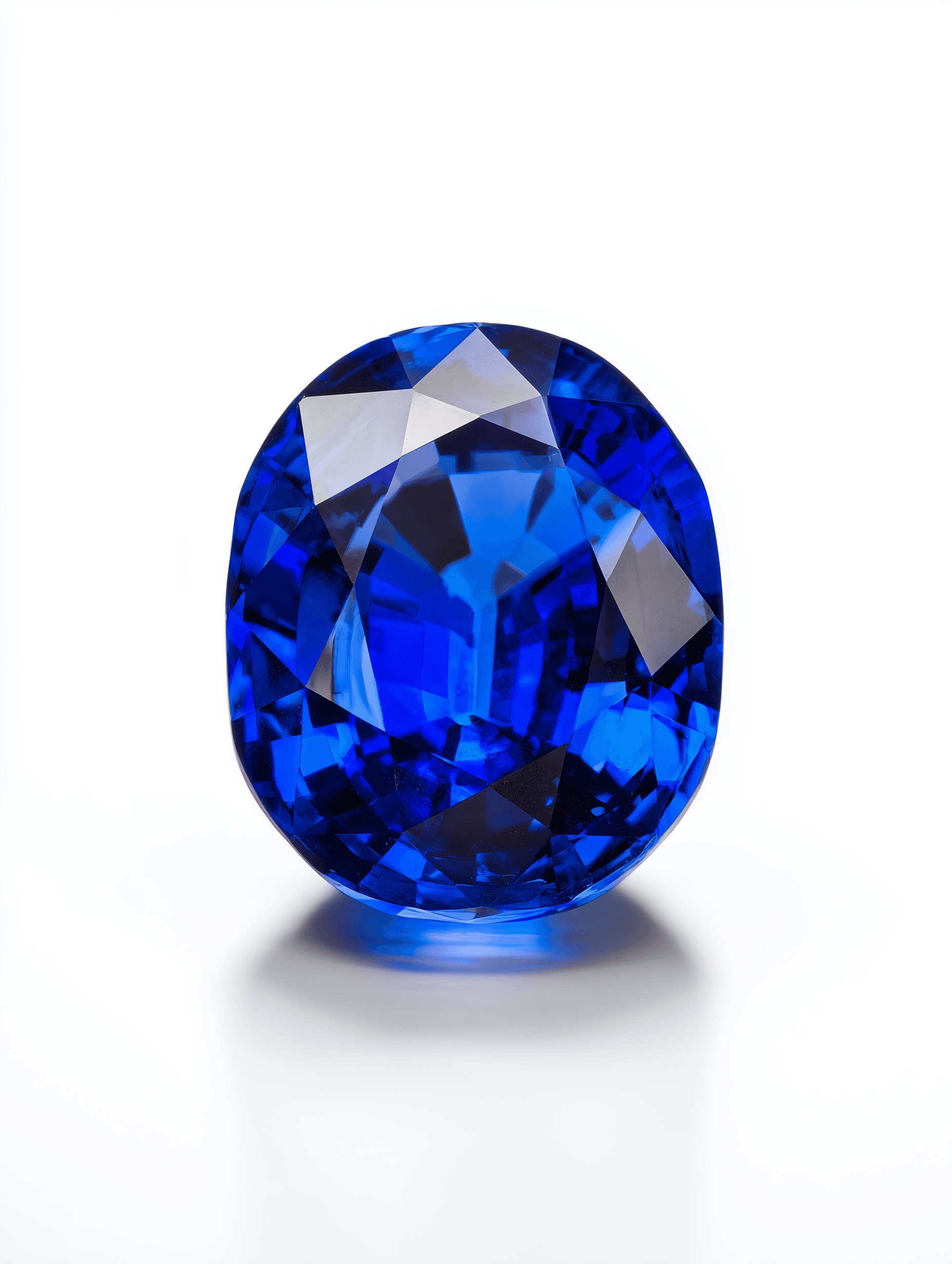
Corundum — the mineral species that includes ruby (red) and sapphire (all other colors). Hardness 9.
Crown — the portion of a cut stone above the girdle.
Cut — the shape and quality of the faceting. GIA grades round brilliant cuts on an Excellent-to-Poor scale; fancy cuts are ungraded.
D
Demantoid — green garnet, Russian origin classic. "Horsetail" inclusions are diagnostic and prized.
Depth % — the stone's depth divided by its width. For round brilliant diamonds, ~60–62% is ideal.
Diffusion treatment — coloration induced by surface diffusion of beryllium or titanium. Permanent but typically disclosed with discount to untreated stones.
Dispersion — the stone's ability to split white light into spectral colors. What jewelers call "fire."
E
Emerald — green variety of beryl. Almost always oiled to improve clarity; see Gemstone Guide.
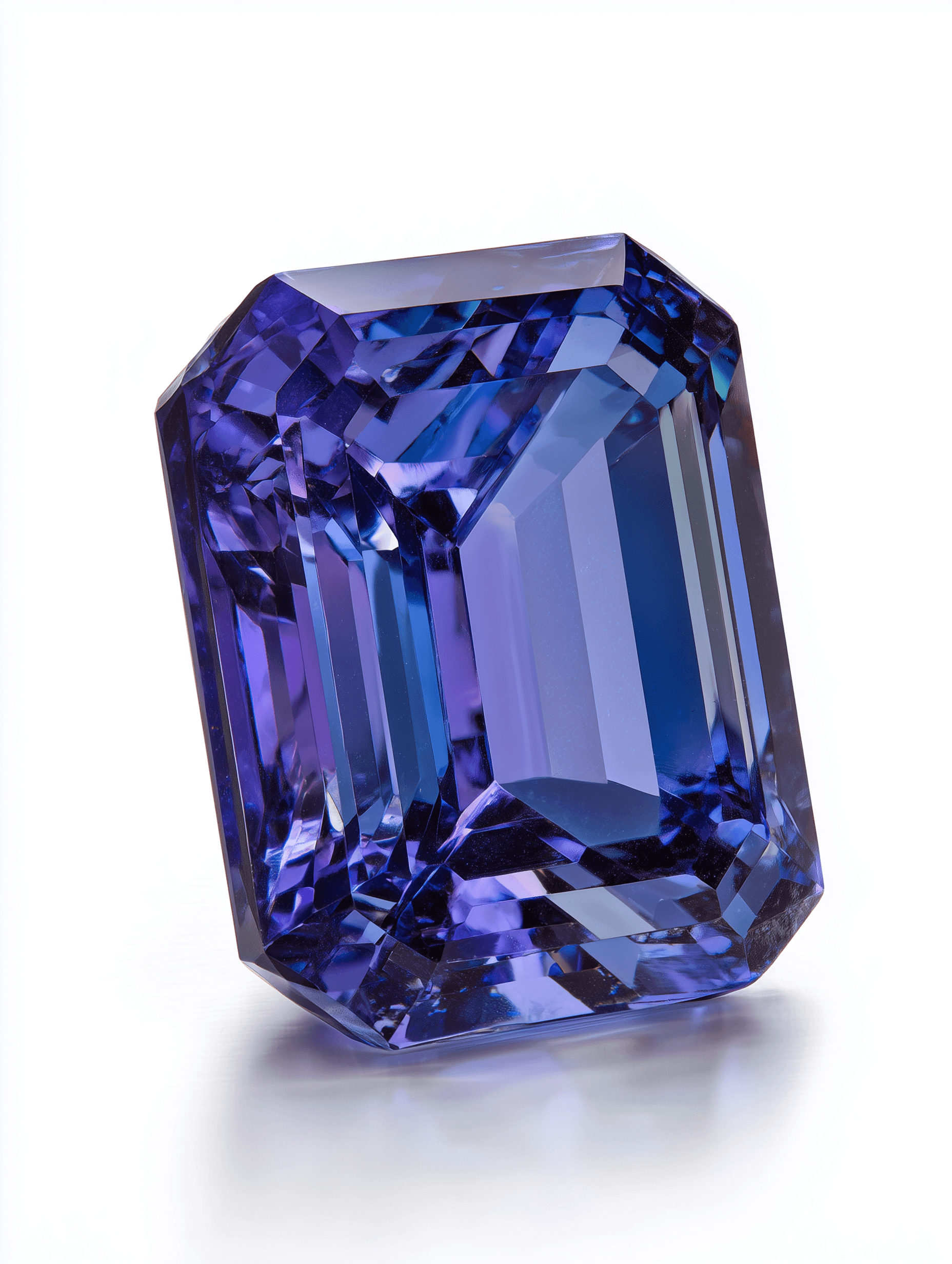
Emerald cut — rectangular step cut with cropped corners, named for its traditional use on emeralds. Shows clarity — buy VS1 or better.
Extinction — dark areas in a stone that return no light. Poor cut amplifies extinction.
F
Facet — one of the polished flat faces of a cut stone. A round brilliant has 57 or 58 (depending on culet presence).
FL / IF — Flawless / Internally Flawless. The top two diamond clarity grades. FL has no inclusions or blemishes at 10×; IF allows surface blemishes.
Fluorescence — glow under ultraviolet light. Graded None / Faint / Medium / Strong / Very Strong. Strong+ can reduce diamond value in high-color grades; may enhance ruby color.
Fracture filling — clarity enhancement by filling surface-reaching cracks with glass, resin, or oil. Disclosed as treatment; heavy filling reduces value significantly.
G
GIA — Gemological Institute of America. The global standard for diamond grading.
Girdle — the outer edge of a cut stone, where crown meets pavilion.
GRS — Gem Research Swisslab. Dominant colored-stone lab; defines "pigeon-blood" and "royal blue" color designations.
Gübelin — Lucerne-based lab, reference standard for premium colored stones.
H
Hardness — resistance to scratching, measured on the Mohs scale (1-10). Corundum = 9, diamond = 10, topaz = 8. Anything 7+ is suitable for daily ring wear.
Heat treatment — applying high temperature to improve color or clarity. Universal and accepted in ruby/sapphire/aquamarine; unheated is premium. Disclosed on lab reports.
HPHT — High Pressure / High Temperature. A synthesis method for lab-grown diamonds and a treatment method for natural diamonds.
Hue — the base color (red, blue, green, yellow). One of three components of color, with saturation and tone.
I
IGI — International Gemological Institute. Antwerp/Mumbai/New York; primary lab for lab-grown diamonds.
Inclusion — internal feature visible at 10× magnification — crystal, fingerprint, feather, cloud, needle. The basis of clarity grading.
Inscription — laser-etched text on a diamond girdle, usually the lab report number. Confirms identity.
K
Kashmir — extinct sapphire source (mines closed 1938). Velvety cornflower-blue stones from Kashmir trade at extreme premiums.
Kohinoor — not a term, a specific stone. Included for completeness.
L
Lab-grown — synthesized diamond or colored stone with the same crystal structure as natural. Priced 60–80% below natural for equivalent grades.
Loupe — a 10× magnifying glass used for clarity and inclusion examination.
M
Mogok — Burmese ruby and spinel source, historic benchmark.
Mohs (scale) — hardness scale, 1 (talc) to 10 (diamond).
N
No-heat / NH — ruby or sapphire with no thermal treatment history. Commands 20–40% premium over heated.
O
Oiling — standard emerald treatment, clear cedar oil into surface-reaching fractures. Graded minor / moderate / significant on lab reports.
Origin — the geographic source of a stone. Often the dominant value factor in high-end colored stones. Determined by inclusion fingerprints and trace-element spectroscopy.
P
Padparadscha — pinkish-orange sapphire, Ceylon and Madagascar origins. "Lotus flower" in Sinhalese. Narrow color range defines the grade.
Paraiba — copper-bearing tourmaline, neon teal-blue. Brazilian origin commands premium; Mozambique source is more abundant.
Pavilion — the portion of a cut stone below the girdle.
Pigeon-blood — GRS color grade for Burmese rubies with specific saturation. Market-leading designation.
Point — 1/100th of a carat. "A 75-pointer" = 0.75 ct.
R
Rubellite — red to pink-red tourmaline. Top grade approaches ruby in color.
Ruby — red corundum, hardness 9.
S
Sapphire — corundum in every color except red (which is ruby).
Saturation — how pure / intense the color is. "Vivid" = highest saturation category.
SSEF — Swiss Gemmological Institute. Reference lab for high-end colored stones.
T
Table — the large flat facet on top of a cut stone. Round brilliant ideal table: 54–58% of diameter.
Tanzanite — blue zoisite, single-source (Merelani, Tanzania). Almost always heat-treated.
Tone — how light or dark the color is, independent of saturation.
Treatment — any post-mining alteration — heat, oiling, diffusion, irradiation, HPHT, filling. Must be disclosed on the lab report.
U
Unheated — colored stone with no thermal treatment. Lab reports say "no indications of thermal enhancement." Premium grade.
Untreated — no treatment of any kind. Even rarer than unheated for ruby and sapphire. The strictest collector grade.
V
VVS1-2 / VS1-2 — diamond clarity grades between the top (FL/IF) and commercial grade (SI).
Vivid — the highest color-saturation grade on most lab scales.
Z
Zoisite — mineral species. Blue variety is tanzanite; green variety is chrome tsavorite's cousin.