April 20, 2026
Alexandrite: The Stone That Changes Colour with the Light
Named after Tsar Alexander II, alexandrite is among the rarest phenomena in the gem world. A fine stone appears emerald green in daylight and transforms to a vivid raspberry red under incandescent light...
By Certified Gemologist
Alexandrite
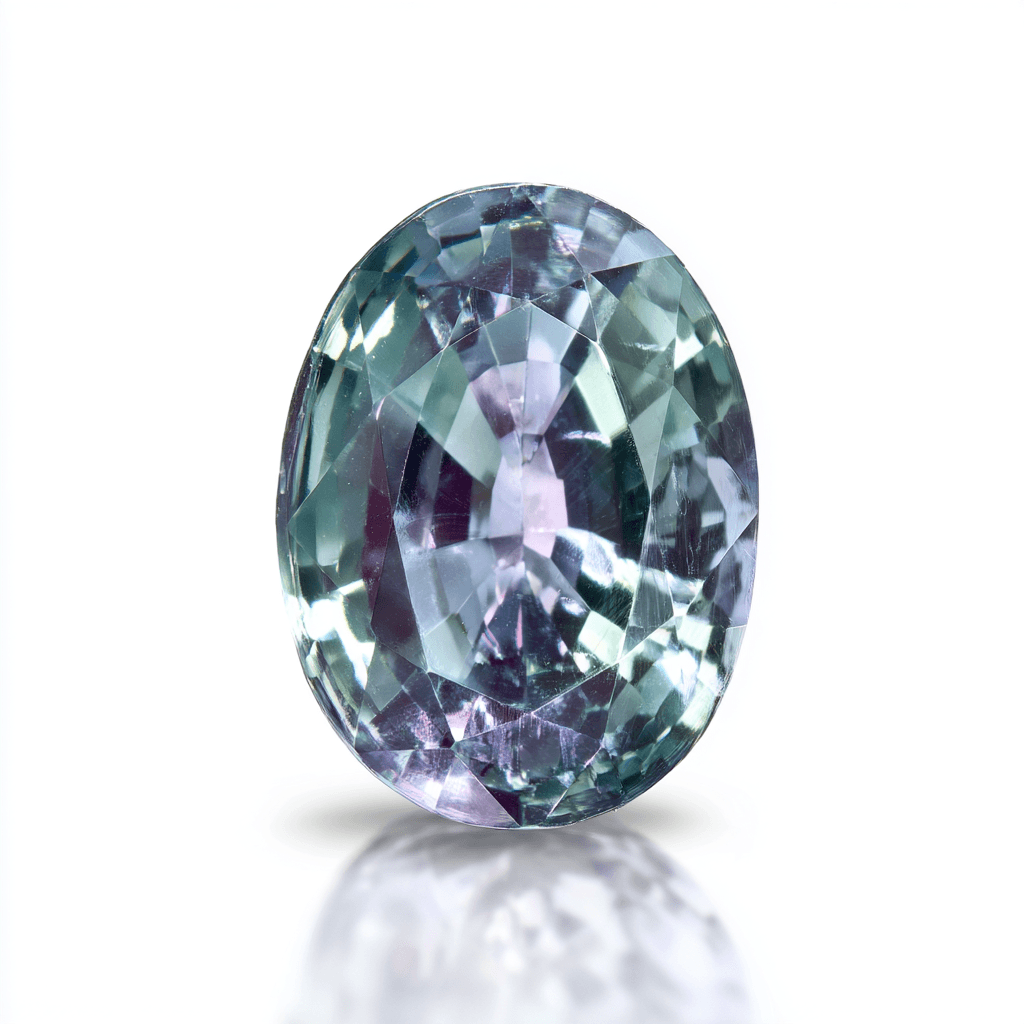
Named after Tsar Alexander II, alexandrite is among the rarest phenomena in the gem world. A fine stone appears emerald green in daylight and transforms to a vivid raspberry red under incandescent light — a colour change so complete it looks like two different stones.
Why the colour shifts
Alexandrite is a chromium-bearing variety of chrysoberyl. Chromium absorbs light in both the yellow and blue portions of the spectrum, leaving a narrow balance between red and green. The mineral's exact crystal structure determines which of those two dominates — and under daylight (blue-rich) the green wins, while under incandescent light (red-rich) the red dominates.
The historical origin
The original deposit was in the Ural Mountains, discovered in 1830 on the day Prince Alexander came of age. Russian alexandrite from this source shows the most vivid, near-complete colour change — which is why the term "Russian colour change" became a trade benchmark.
By the 20th century the Uralian deposit was effectively depleted. Today most commercial material comes from Brazil (Minas Gerais), Sri Lanka, East Africa (Tanzania, Zimbabwe), and India. Brazilian stones from Hematita can approach Russian-grade change; African material often shows a less complete change, shifting green to brownish-red rather than raspberry.
What makes a fine alexandrite
Four factors determine value:
- Completeness of change — the best stones show 100% change (green to red). Lesser material shifts green to olive, or green to brown.
- Saturation of both colours — a washed-out pale stone is less desirable than a vividly saturated one, even with a smaller colour change.
- Clarity — alexandrite is typically included; eye-clean stones command a premium.
- Size — fine alexandrites over 3 ct are genuinely rare. Most of the stones in the jewellery trade are under 1 ct.
Certification
Colour change is photographed in the lab under two standardised light sources. A Gübelin, SSEF, or GRS report will grade the change from "weak" through "strong" to "exceptional / outstanding" — the last being reserved for pieces that read as full complementary colours.
How we advise clients
Always view an alexandrite in three light conditions before committing: natural daylight (ideally north-facing window), an incandescent bulb or candle, and shade. The change should be decisive; if you have to squint to see it, the stone is not in the top grade.
If alexandrite is on your list, open an inquiry with your preferred size and we can share what is currently available with certification.